Login

Sign Up

After creating an account, you'll be able to track your payment status, track the confirmation and you can also rate the tour after you finished the tour.
Username*
Password*
Confirm Password*
First Name*
Last Name*
Birth Date*
Email*
Phone*
Country*
* Creating an account means you're okay with our Terms of Service and Privacy Statement.
Please agree to all the terms and conditions before proceeding to the next step

Already a member?

Login
+51 941411442 info@andesperuexpeditions.com

Login

Sign Up

After creating an account, you'll be able to track your payment status, track the confirmation and you can also rate the tour after you finished the tour.
Username*
Password*
Confirm Password*
First Name*
Last Name*
Birth Date*
Email*
Phone*
Country*
* Creating an account means you're okay with our Terms of Service and Privacy Statement.
Please agree to all the terms and conditions before proceeding to the next step

Already a member?

Login

Rainbow Mountain Peru Guide: Tips, FAQs & Best Time

Complete Guide to Rainbow Mountain Peru: Tips, FAQs, Best Time to Visit & Red Valley

Visiting Rainbow Mountain Peru is one of the most unforgettable experiences for travelers exploring the Andes. However, many visitors still have questions about the hike—its difficulty level, altitude challenges, weather conditions, the best time to visit, what to bring, and whether it’s worth adding the stunning Red Valley to the route. In this guide, we answer the most common questions from travelers and share local expert tips to help you enjoy a safe, smooth, and crowd-free adventure to one of the most colorful natural wonders in Peru.

Rainbow Mountain Peru: A Spectacular Andean Adventure

Rainbow Mountain: An Experience Worth Having

Nestled in the heart of the Peruvian Andes, Rainbow Mountain is a breathtaking natural wonder that has captured the attention of travelers from around the world. Known for its vibrant, multi-colored slopes, this iconic destination offers not just a visual feast, but also an unforgettable adventure that immerses you in the rich culture and stunning landscapes of Peru.

Whether you are an avid trekker or a curious traveler seeking unique experiences, Rainbow Mountain promises a journey filled with awe-inspiring views, crisp mountain air, and memories that will last a lifetime. In this guide, we’ll answer all your questions, share tips for the best time to visit, and help you plan a safe and comfortable trip. Discover why visiting Rainbow Mountain is truly an experience worth having.

Which is better, the Sacred Valley or Rainbow Mountain?

Both destinations are great options, but they offer very different experiences. The Sacred Valley is ideal for acclimatization and is usually done as a full-day cultural tour. You can visit iconic sites such as Ollantaytambo (recommended by The New York Times), Moray, and the Maras Salt Mines, making it the perfect archaeological and historical introduction before visiting Machu Picchu.

Rainbow Mountain, on the other hand, is a nature-focused adventure that involves hiking at elevations above 5,000 meters (16,400 ft). Because of the high altitude, it’s important to acclimatize in Cusco for at least one full day—preferably by doing an easy day tour like the Sacred Valley or a half-day city tour—before attempting the hike. Both are worth visiting, but the best option depends on whether you prefer culture and history or high-altitude trekking and natural landscapes.

Is Rainbow Mountain really hard?

Rainbow Mountain requires a moderate level of physical fitness, mainly because of the high altitude rather than the difficulty of the trail itself. The hike is manageable for most travelers, but it’s essential to acclimatize in Cusco for 1–2 days beforehand. Doing an acclimatization tour—such as the Sacred Valley or a half-day city tour—will help your body adjust and make the experience much more comfortable.

How long do you need for Rainbow Mountain?

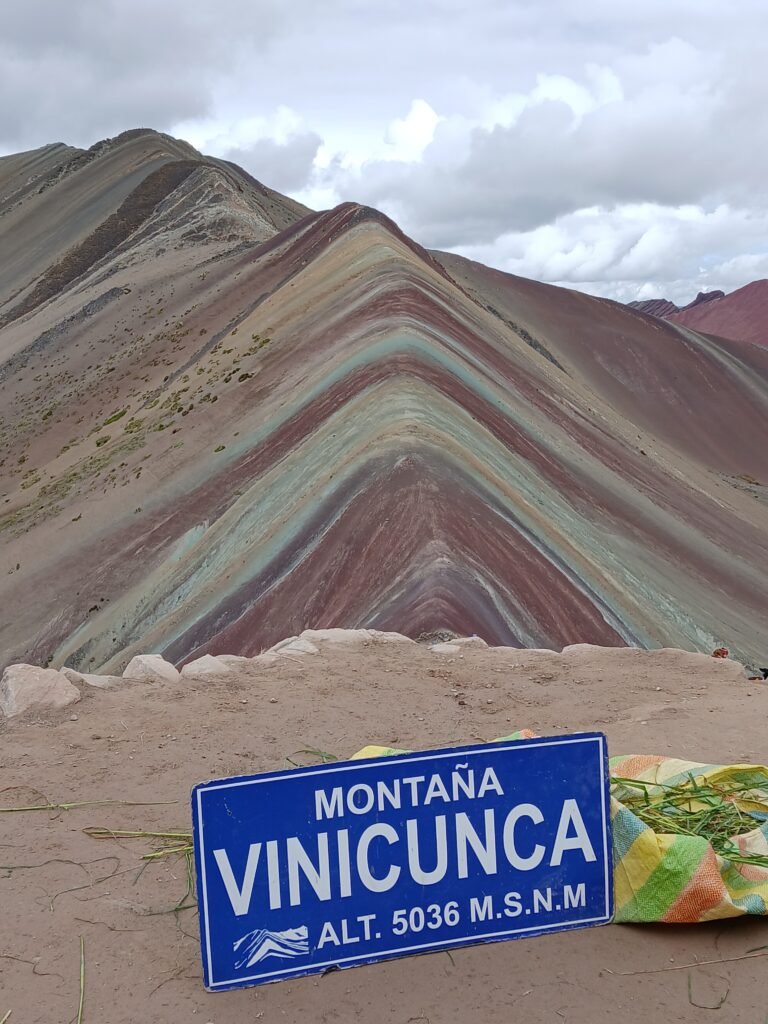
You only need one full day to visit Rainbow Mountain. The hike starts at 4,600 m (15,092 ft) and reaches the summit at 5,036 m (16,522 ft). In total, you’ll hike about 7 km, and the entire tour—from departure to return—usually lasts around 10 hours.
If you prefer a less crowded experience, check out our Rainbow Mountain with Late Departure tour.

For travelers looking for a multi-day adventure, there is also a 2-day, 1-night trek known as Ausangate to Rainbow Mountain, which offers an even deeper connection with the Andean landscape.

Is the Rainbow Mountain tour worth it?

Yes, Rainbow Mountain is absolutely worth it. Today it’s one of the most popular attractions in Peru, right after Machu Picchu. The impressive colors, high-Andean landscapes, and unique geology make it a truly unforgettable experience.
If you want to avoid the crowds, consider our Rainbow Mountain with Late Departure tour—a great way to enjoy the mountain with fewer people and better views.

Is it better to go to Rainbow Mountain in the morning or in the afternoon?

Great question. Most tours leave Cusco at 3:00–4:00 AM, aiming to arrive early—but in reality, this is when the mountain is the most crowded. These tours usually return to Cusco around 3:00 PM.

We offer a different and more comfortable option: our Rainbow Mountain with Late Departure tour. By leaving later in the morning, you can enjoy the hike with far fewer people, avoid the early wake-up, and appreciate better views in a quieter atmosphere. It’s the best way to experience Rainbow Mountain without the crowds.

Colorful striped formations of Rainbow Mountain in Peru with visitors on the trail.

Location of Rainbow Mountain

Rainbow Mountain, or Vinicunca, is one of Peru’s most spectacular natural attractions, located in the heart of the Andes. Situated about 100 kilometers (62 miles) southeast of Cusco, this colorful mountain is part of the majestic Ausangate mountain range, which is famous for its snow-capped peaks, glacial streams, and vibrant landscapes. Rising over 5,000 meters (16,400 feet) above sea level, Rainbow Mountain offers breathtaking views that make it a must-visit destination for travelers seeking adventure, culture, and unforgettable scenery.

Knowing the exact location of Rainbow Mountain is essential for planning a successful trek. Most visitors start their journey from Cusco, taking guided tours or independent treks that navigate high-altitude trails and scenic viewpoints. Whether you are looking for the classic one-day trek or multi-day adventures around the Ausangate region, understanding how to reach Rainbow Mountain will help you make the most of your visit.

In this guide, we’ll cover everything you need to know about the location of Rainbow Mountain in Peru, including how to get there, the best times to visit, and essential tips for acclimatizing to the altitude. With the right preparation, your trip to Rainbow Mountain will be a safe, comfortable, and unforgettable experience, showcasing the incredible beauty of the Peruvian Andes.

Travelers trekking across the colorful slopes of Rainbow Mountain in Peru on a bright day.

What is the closest city to Rainbow Mountain?

The closest city to Rainbow Mountain is Cusco. From Cusco, it takes approximately 3 hours by bus to reach the starting point of the hike.

Is Rainbow Mountain in Peru worth it?

Yes, Rainbow Mountain is definitely worth visiting. It has become one of the top attractions for travelers staying in Cusco. If you prefer a similar experience with an easier hike, you can also visit Palcoyo, another beautiful rainbow-colored mountain.

For a more relaxed experience at Vinicunca (Rainbow Mountain), we recommend our Rainbow Mountain with Late Departure tour. Leaving later in the morning allows you to enjoy the landscape with fewer crowds and at a more comfortable pace.

What is special about Rainbow Mountain?

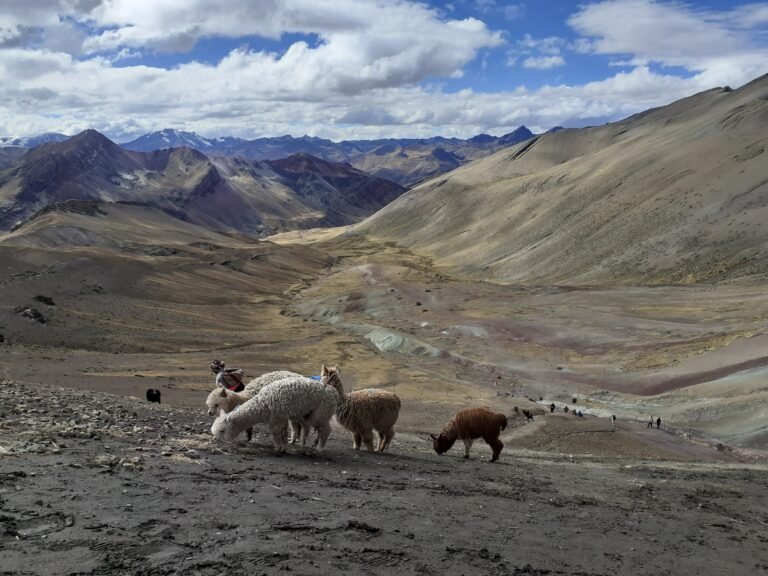
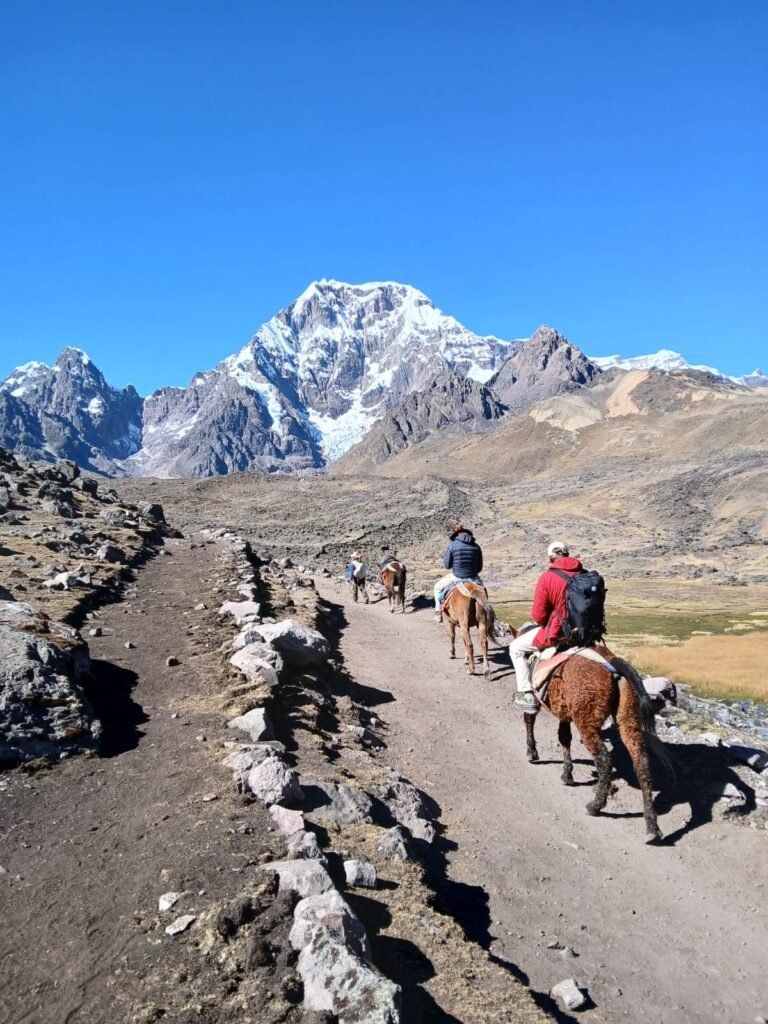
Rainbow Mountain is special because of its unique Andean landscape. The area features snow-capped peaks, striking red and multicolored mountains, wide open valleys, and traditional local communities. Along the trail, you’ll also see domesticated animals such as llamas and alpacas, as well as high-Andean birds like the Andean caracara.
The combination of geology, scenery, and local culture makes Rainbow Mountain a truly unforgettable place.

How do you get to Rainbow Mountain?

To reach Rainbow Mountain, you travel by van from Cusco to the trailhead, which takes about 3 hours. From there, you’ll hike approximately 7 km, starting at 4,600 m (15,092 ft) and reaching the summit at 5,036 m (16,522 ft). After the hike, you return to Cusco by van. Most tours include breakfast and lunch at a local restaurant along the way.

You can visit either early in the morning or with our Rainbow Mountain with Late Departure option, which allows you to enjoy the mountain with fewer crowds.

For those seeking a multi-day adventure, you can also choose the 2-day, 1-night Ausangate to Rainbow Mountain trek, which includes camping and a deeper experience of the Andean landscape.

How much does it cost to visit Rainbow Mountain?

The cost of visiting Rainbow Mountain varies depending on the type of tour you choose. Prices typically range from 80 soles to 120 USD. The lower-cost option (around 80 soles) is a group tour, often with up to 20 travelers and only one guide, departing very early in the morning between 3:00 and 4:00 AM. These tours are suitable for experienced hikers who don’t mind larger groups.

Small-group or private tours are more personalized, with guides who pay close attention to each traveler’s comfort and safety. Our Rainbow Mountain with Late Departure tour leaves Cusco around 7:00 AM, allowing you to avoid the crowds and enjoy a more comfortable experience.

What currency does Peru use?

In Peru, both Peruvian soles (PEN) and US dollars (USD) are commonly used. Most online tour bookings are paid in dollars, while cash payments during hikes—such as bathrooms, souvenirs, snacks, or tips—are usually made in soles.

You can easily exchange money in the historic center of Cusco, where many trusted exchange houses are located. We recommend carrying some cash in soles for small purchases throughout your trip.

The Story Behind Rainbow Mountain

Rainbow Mountain, also known as Vinicunca, is more than just a stunning natural wonder; it carries a rich history and cultural significance that makes it truly unique. For centuries, the local Quechua communities have revered these colorful slopes as sacred, considering them a symbol of the powerful Andean spirits that watch over the land. The vibrant stripes of the mountain are a result of centuries of geological activity, with mineral deposits creating the breathtaking red, yellow, and green hues that attract travelers from around the world.

Understanding the story behind Rainbow Mountain gives your visit a deeper meaning, connecting you not only to its natural beauty but also to the traditions and legends of the Andes. In this guide, we’ll explore the fascinating history, cultural importance, and natural phenomena that make Rainbow Mountain a destination unlike any other, ensuring that your trek is not just a hike, but a journey through time and culture.

What is the spiritual meaning of Rainbow Mountain?

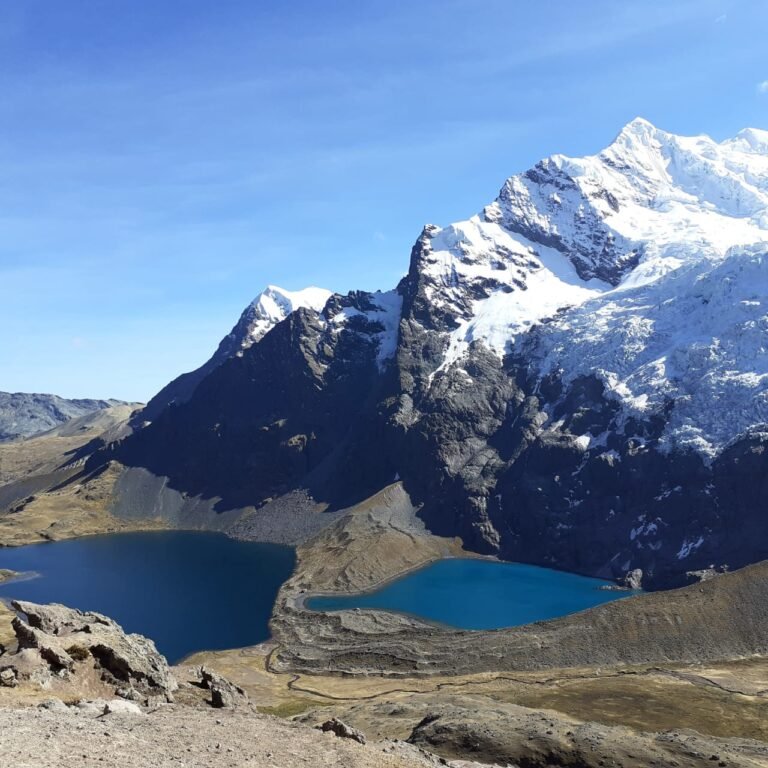
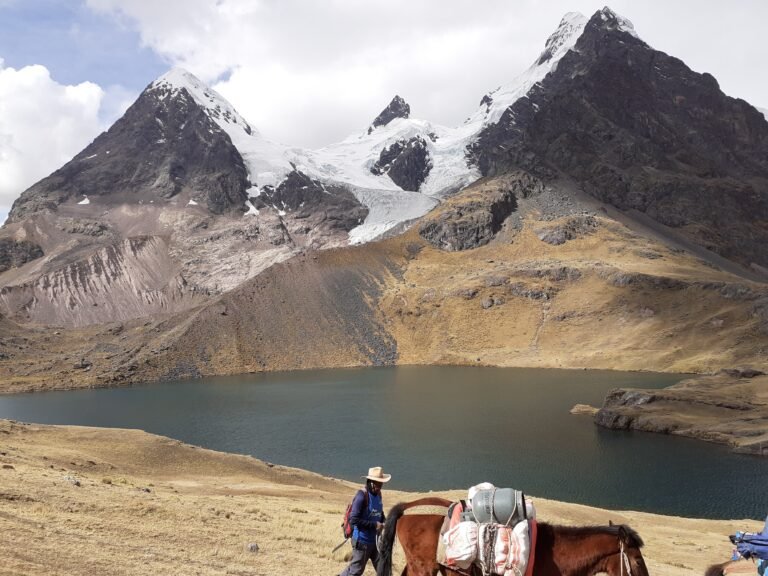
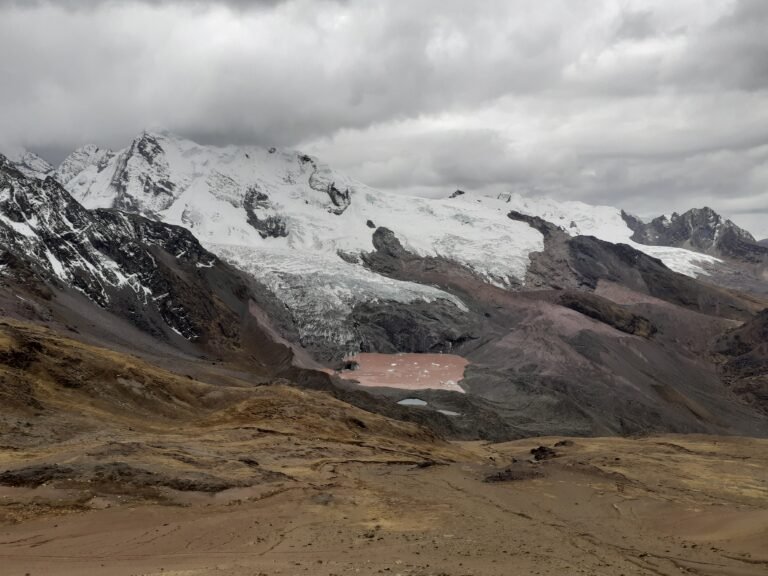
Rainbow Mountain is located approximately 100 km southeast of Cusco, within the Vilcanota mountain range. This area is home to the majestic Ausangate glacier, the highest mountain in Cusco at 6,384 meters. Ausangate has been considered a sacred Apu since Inca times—Apu is a Quechua word meaning protector or sacred mountain, where the spirit of water is believed to reside. Its name, Ausangate, is associated with being the “creator of waters,” and the region is surrounded by lagoons of stunning turquoise and earthy tones.

For the Incas, Ausangate was an important spiritual deity, and even today, local people continue to make offerings, especially on August 1st, the Day of Pachamama (Mother Earth). The entire area offers a deep spiritual connection with the Andes: colorful valleys, red mountains, glaciers, and vibrant landscapes that inspire respect and devotion to nature.

If you want to experience this unique energy, we recommend our Ausangate to Rainbow Mountain 2 Days / 1 Night or our Rainbow Mountain with Late Departure, designed to enjoy a more peaceful and meaningful connection with the sacred mountains.

Why is Rainbow Mountain so colorful?

Rainbow Mountain’s vibrant stripes are the result of millions of years of geological formation. Different minerals were deposited in layers over time, creating the natural palette we see today. Each color corresponds to a specific mineral:

  • Red – due to clay and iron oxide
  • Yellow – from sandstone with manganese
  • Brown – from rocks rich in magnesium
  • Green and violet tones – produced by copper and other mineral oxides

According to local communities, these colors began to appear visibly only about 70 years ago, after the ice that once covered the area started to melt, revealing the mountain’s natural pigments.

Rainbow Mountain became popular as a one-day tour around 2015–2016. Before that, it could only be visited as part of a 5-day trek in the Ausangate region.

Today, you can explore this destination through our full-day Rainbow Mountain tour or the 2-day Ausangate to Rainbow Mountain tour, designed for a deeper experience of this unique landscape.

What is the science behind Rainbow Mountain Peru?

The science behind Rainbow Mountain lies in its geological formation, which took place over millions of years. More than 14 different minerals were deposited in layers, and each mineral contributes to the mountain’s unique colors:

  • Red – produced by clay and iron oxide
  • Yellow – from sandstone rich in manganese
  • Brown – due to magnesium-rich rock
  • Green and violet tones – created by copper and other mineral oxides

According to local residents, these colors only became visible about 70 years ago, when the ice that once covered the area melted and exposed the mineral layers.

Rainbow Mountain began gaining popularity as a one-day tour between 2015 and 2016. Before that, it was accessible mainly through a 5-day trek in the Ausangate region.

If you want to experience this fascinating natural wonder, check out our full-day Rainbow Mountain tour or our 2-day Ausangate to Rainbow Mountain adventure.

Is the Rainbow Mountain in Peru real?

Yes, Rainbow Mountain is absolutely real. Its colors are naturally formed by layers of mineral-rich sediment, but the beauty of the area goes far beyond the famous stripes. The region features snow-capped peaks, high-altitude valleys, colorful rock formations, and turquoise lagoons, creating a truly stunning Andean landscape.

There are also other colorful mountains nearby, such as Palcoyo, an excellent alternative with easier access and fewer crowds. Palcoyo even appears in the movie Paddington in Peru.

If you want to explore these incredible landscapes, we offer tours to both Rainbow Mountain and Palcoyo.

What is the history of Rainbow Mountain?

Rainbow Mountain’s history is written in its geology. The colorful stripes were formed millions of years ago through the gradual deposition of more than 14 different minerals, each one creating a distinct layer:

  • Red: clay and iron oxide
  • Yellow: sandstone with manganese
  • Brown: rock rich in magnesium
  • Green & violet tones: copper and other mineral oxides

According to local communities, the mountain’s vibrant colors became visible only about 70 years ago, when the snow and ice that once covered the area began to melt.

Rainbow Mountain only became a popular one-day tourist destination around 2015–2016. Before that, it was accessible mainly through a 5-day Ausangate trek, known only to experienced hikers.

If you want to explore this unique landscape, check out our full-day tour or our 2-day Ausangate to Rainbow Mountain adventure.

What does the rainbow mean spiritually?

Rainbow Mountain is located near Ausangate, one of the most sacred mountains for the Inca civilization. Ausangate has long been considered an Apu, a Quechua word meaning “protector” or “sacred mountain.” Even today, local communities honor Ausangate with traditional offerings, especially on August 1st, the Day of Pachamama (Mother Earth).

Because Cusco lies so close to this powerful Apu, the region is known as the spiritual center of the Andes. Visiting Rainbow Mountain is not only a visual experience but also a chance to feel a deep spiritual connection to the Andean world, its sacred mountains, and its ancient traditions.

Difficulty of Climbing Rainbow Mountain

Climbing Rainbow Mountain, or Vinicunca, is an adventure that promises breathtaking views and unforgettable experiences, but it also comes with its own set of challenges. Located at an altitude of over 5,000 meters (16,400 feet) in the Peruvian Andes, the trek requires a good level of physical fitness and preparation. The trails vary in difficulty, with steep sections, uneven terrain, and high-altitude conditions that can test even experienced hikers.

Understanding the difficulty of climbing Rainbow Mountain is essential for planning a safe and enjoyable trip. In this guide, we’ll provide tips on what to expect during the trek, how to prepare for the altitude, and advice for hikers of all levels. By knowing the challenges in advance, you can ensure that your journey to Rainbow Mountain is not only achievable but also an incredible and rewarding experience.

What is the weather like at Rainbow Mountain?

The weather in the Cusco region—where Rainbow Mountain is located—is very diverse, with two well-defined seasons: the dry season and the rainy season.

Dry Season (April to November)

This is the best time to visit Rainbow Mountain and Machu Picchu, and it’s also the peak tourist season.

  • Temperatures range from -2°C to 18°C (28°F to 64°F).
  • From June to August, Cusco experiences the coldest period, known as the frost season. Nighttime temperatures can drop to -5°C (23°F), especially between midnight and 3:00 am.
  • Mornings can be extremely cold, but once the sun rises, temperatures can reach up to 25°C (77°F) at the summit.
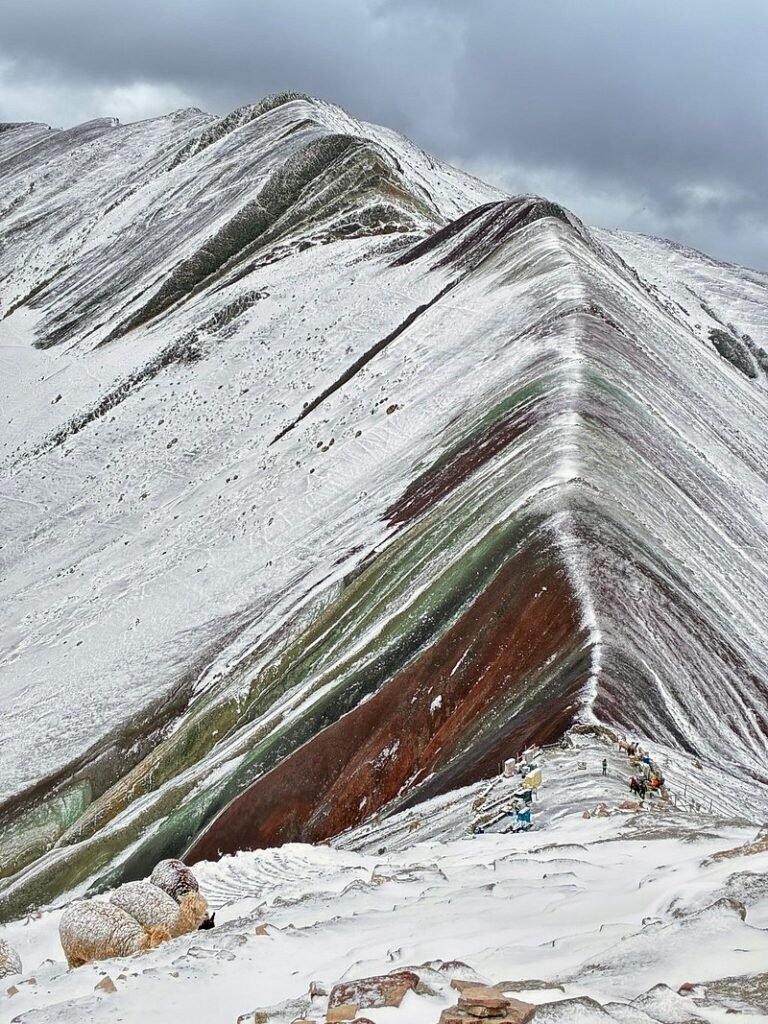
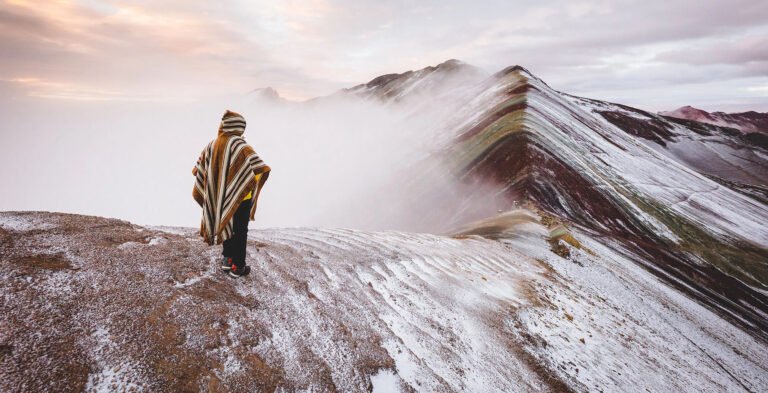
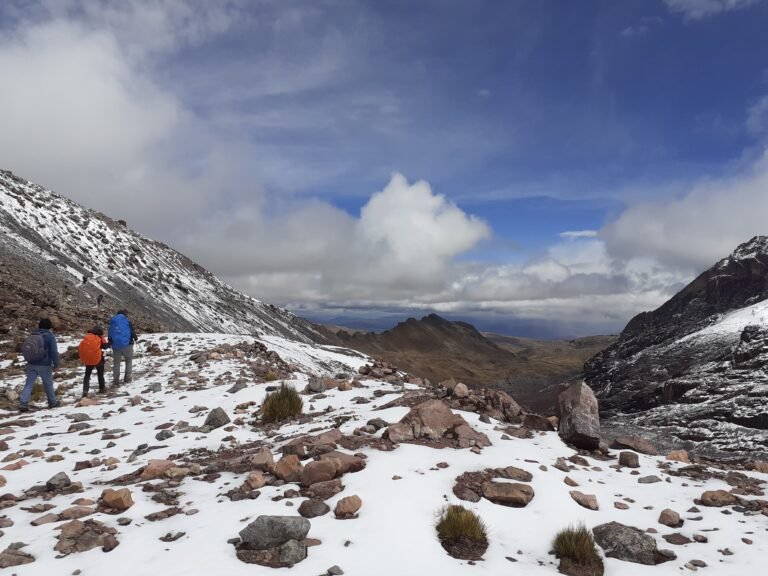
  • Occasional snowfall may occur, covering Rainbow Mountain with a white layer—something many travelers find beautiful.

Rainy Season (December to March)

Rainy season begins gradually after the first short showers in August and September, but the real rains start in December.

  • During the early rainy season (December), Cusco experiences a “summer sun” effect due to the solstice, with temperatures ranging from 7°C to 25°C (45°F to 77°F).
  • January brings heavier rainfall, and February is the peak of the rainy season with constant storms, thunder, and strong showers.

This is considered low season for tourism.

Certain hikes—like the Inca Trail—close for maintenance and safety.

Landslides and rockfalls can occur in the highlands and cloud forest.

Even during rainy season, not every day is rainy—there are sunny days, rainbows, and impressive skies, making it a visually dramatic time to visit.

Weather Tips for Hiking Rainbow Mountain

The Andes have unpredictable weather, and conditions can change suddenly—even when the forecast looks clear. Whether it’s Ausangate, Rainbow Mountain, or any other high-altitude trek, always come prepared for rain, wind, cold, and strong sun.

Pro tip:
Dress in layers. You’ll warm up during the ascent and cool down quickly at the summit.

Bring:

  • A waterproof hiking jacket
  • A rain poncho
  • Warm layers (fleece, thermal base layer)
  • A hat and gloves (especially in dry season)
  • Waterproof hiking boots

Check our tours for detailed packing lists for each experience.

Can a beginner hike Rainbow Mountain?

Yes, beginners can hike Rainbow Mountain, but the trail is considered moderate due to the high altitude. Before visiting, it’s very important to acclimatize in Cusco for 1–2 days. You can do this by taking easy half-day or full-day tours such as the Sacred Valley or City Tour.

The highest point of the hike reaches 5,032 m / 16,512 ft, and everyone reacts differently to altitude—some adapt quickly, while others may need more time. We recommend acclimatizing, staying hydrated, and consulting your doctor about altitude-sickness medication if needed.

If you want an easier experience with fewer crowds, check out our Rainbow Mountain with Late Departure tour.

How long does it take to climb Rainbow Mountain?

The hike covers 7 km (round trip) and usually takes about 3 hours total: approximately 2 hours going up and 1 hour coming back down to the parking area. The trail is mostly gradual, with only the final section being a bit steep.

Reaching the viewpoint is absolutely worth it—you’ll be rewarded with stunning, wide-open views of Rainbow Mountain in all its natural beauty.

Do you need oxygen for Rainbow Mountain?

If you acclimate for 1 to 2 days in Cusco, you should be able to hike Rainbow Mountain without needing supplemental oxygen, since the difficulty is considered moderate due to the high altitude.

If you are coming directly from sea level, you might feel the altitude more intensely and could need oxygen. However, doing acclimatization tours beforehand helps prepare your body for the 5,032 m / 16,509 ft elevation of Rainbow Mountain.

In our tours, all our guides carry oxygen tanks and are fully trained to use them in case of an emergency.

To support acclimatization, some travelers also take medication such as acetazolamide—always consult your doctor before traveling. You can also purchase it easily once you arrive in Cusco.

Do you need hiking poles for Rainbow Mountain?

Hiking poles are not absolutely necessary, since most of the trail is gradual and only the final section is a bit steep. However, they can be very helpful—especially during the descent.

On our tours, we recommend using trekking poles for extra comfort, better balance, and a more enjoyable hiking experience overall.

Is Rainbow Mountain actually worth it?

Yes, Rainbow Mountain is absolutely worth visiting. The landscapes are unique, colorful, and unlike anything else in Peru.

For the best experience, we recommend our Rainbow Mountain with Late Departure tour. Leaving Cusco around 7:00 am allows you to avoid the early-morning crowds and enjoy the mountain with fewer people around.

Check out our tours to make the most of your visit.

How bad is altitude sickness in Peru?

Altitude sickness can feel quite uncomfortable if you don’t acclimate properly. The best way to prepare is to spend 1–2 days in Cusco doing light activities such as half-day or full-day tours before attempting high-altitude hikes like Rainbow Mountain. Staying hydrated is essential, and some travelers also use medication to help with the adjustment.

Many visitors take acetazolamide to prevent altitude sickness. It can cause mild tingling in the cheeks, fingers, and toes, and it has a diuretic effect, so drinking plenty of water is important. Remember that altitude sickness happens because your body receives less oxygen, and staying hydrated helps your system adjust.

If you prefer a natural option, you can try “Soroche Pills,” made from ingredients like coca, ginger, and mint. Both medications can be purchased easily in Peru without a prescription, but you should always consult your doctor first, especially before taking acetazolamide.

Overall, proper acclimatization—light hikes and cultural tours such as the Sacred Valley or City Tour—is the best way to avoid altitude sickness and enjoy your time in the Andes.
Check out our tours designed to help you acclimate safely.

Experience Rainbow Mountain with Experts from Andes Peru Expeditions

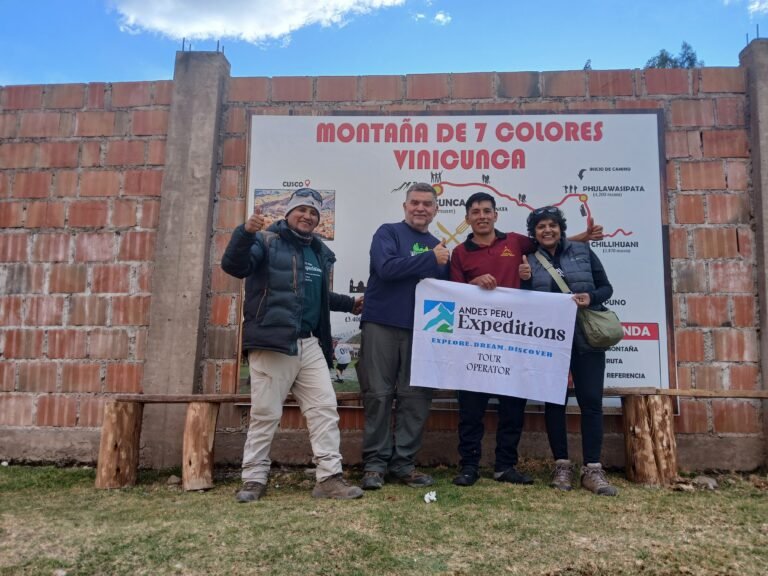
All the questions on this page about Rainbow Mountain have been carefully answered by our local professional guides. At Andes Peru Expeditions, we provide travelers with accurate, first-hand information based on years of experience guiding tourists in the Cusco and Andes region.

Our guides know the trails, weather conditions, cultural significance, and safety tips better than anyone. Whether you’re curious about the difficulty of the hike, altitude sickness, the best time to visit, or the spiritual meaning of the mountains, you can trust our insights to plan your trip with confidence.

We also offer unique tours, including our popular Rainbow Mountain with Late Departure Tour, designed to help you avoid crowds and enjoy the mountain in a relaxed, private way, as well as the Ausangate Trek 2 Days, an incredible experience to explore glaciers, lagoons, and breathtaking Andean landscapes. Explore the Andes safely, comfortably, and memorably with Andes Peru Expeditions, your local experts in adventure and culture.

Recommended Tours

Leave a Reply