Most travelers come to Cusco for one reason: Machu Picchu. However, many miss one of the most important cultural experiences in the city—the Inca Museum, considered the finest archaeological museum in Peru and one of the most significant in the Americas.
Located just steps from Cusco’s Plaza de Armas, the Inca Museum offers essential context for understanding the Inca civilization. Its exhibits explain the history, culture, and engineering behind the temples, stonework, and landscapes found throughout Cusco, the Sacred Valley, and Machu Picchu.
The museum is ideal to visit before traveling to Machu Picchu, as it helps visitors recognize architectural techniques and cultural symbols at the site. It is equally valuable after returning, providing deeper insight into what you have already seen.
For English-speaking travelers from the United States, Europe, and Canada who enjoy history, museums, and authentic cultural experiences, the Inca Museum is not just an optional stop—it is an essential part of any visit to Cusco.
If Machu Picchu is the highlight of your trip to Peru, the Inca Museum is where its story truly begins.
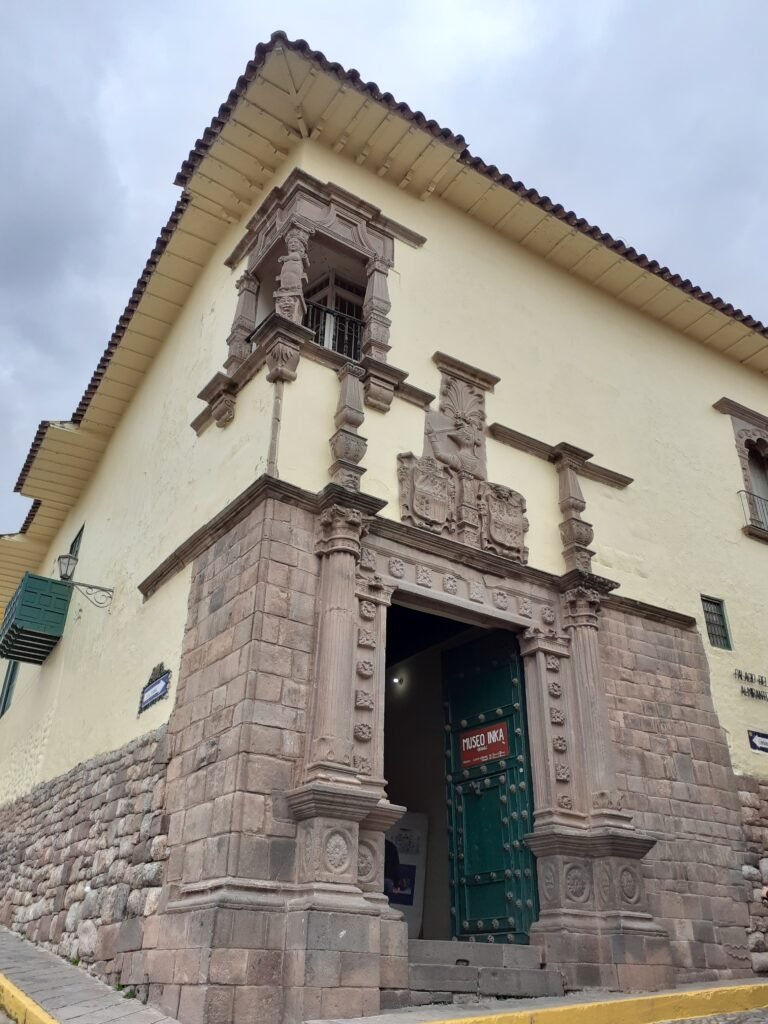
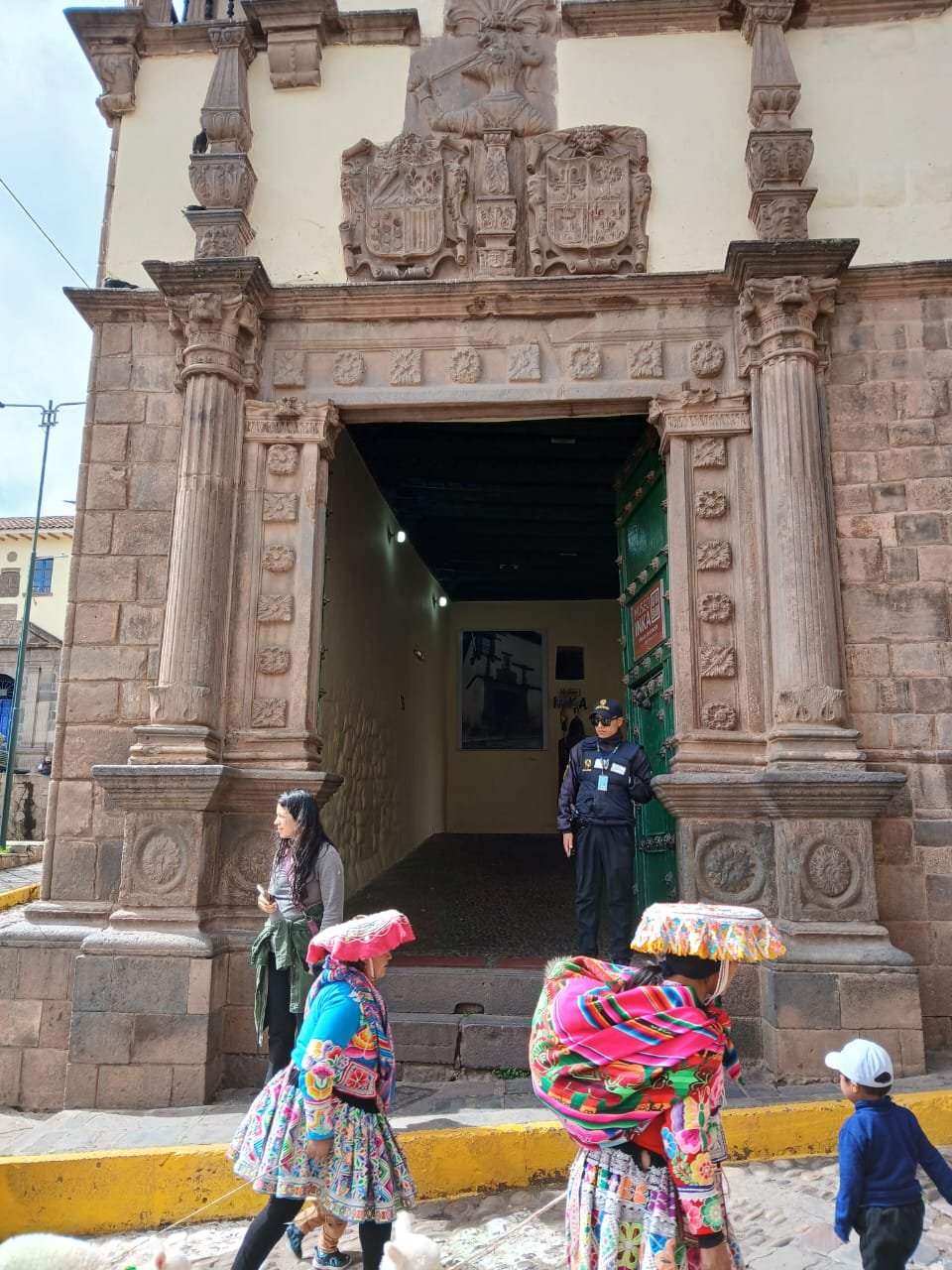
Located just a few steps from Cusco’s Plaza de Armas, the Inka Museum (Museo Inka) stands in the heart of the ancient sacred Inka city, laid out in the shape of a Puma. What many visitors don’t realize is that this impressive colonial building — known as the House of the Admiral — was constructed directly on the foundations of the palace of Inka Huáscar, son of Huayna Cápac.
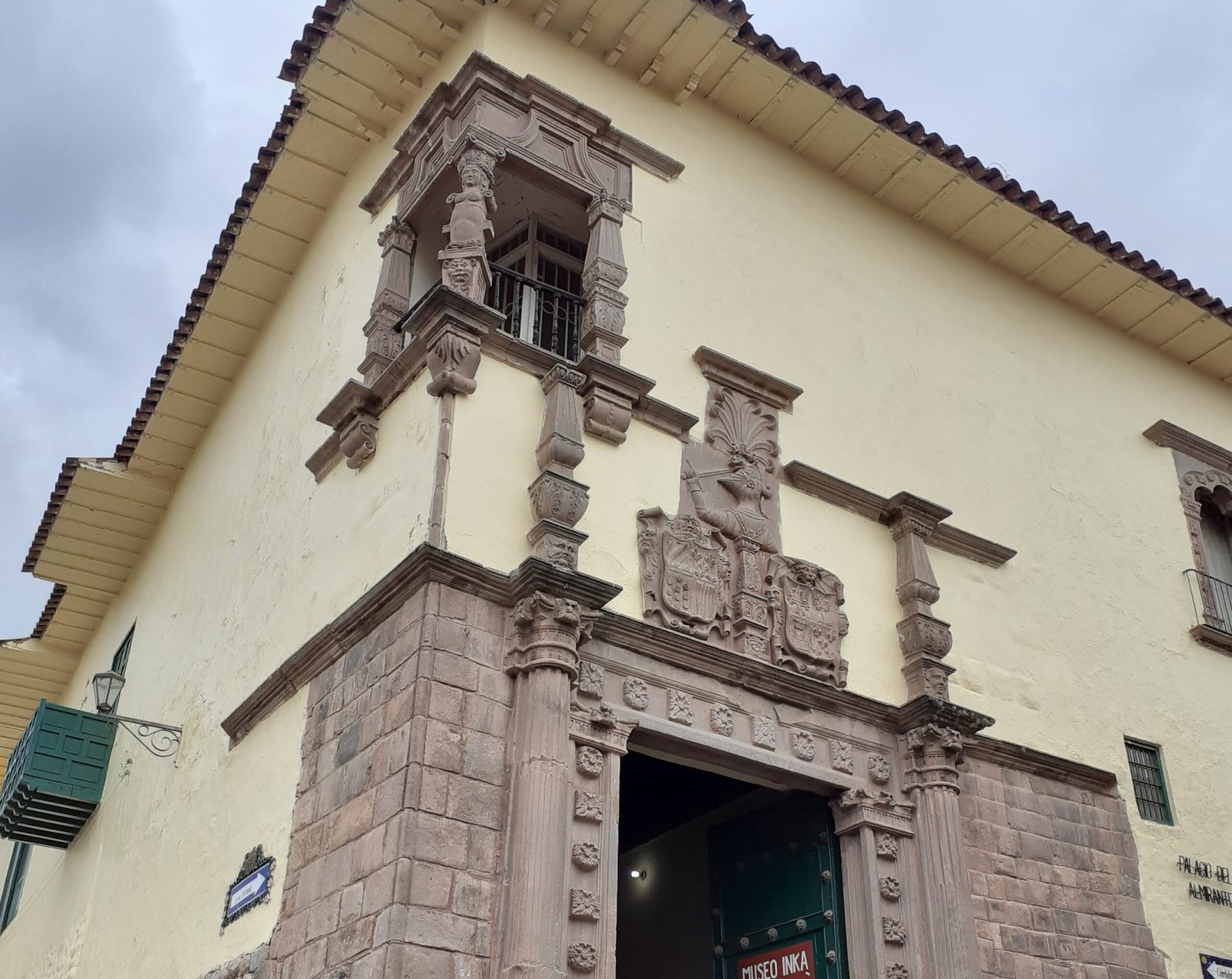
After the Spanish conquest, the land was granted to Diego de Almagro during the infamous redistribution of plots. By the late 16th and early 17th centuries, Francisco Alderete Maldonado commissioned the construction of the residence we see today. Its monumental Renaissance and Mannerist façade immediately sets it apart as one of the most architecturally significant colonial houses in Cusco.
This is not just a museum entrance — it is a statement of power, symbolism, and spiritual intention.

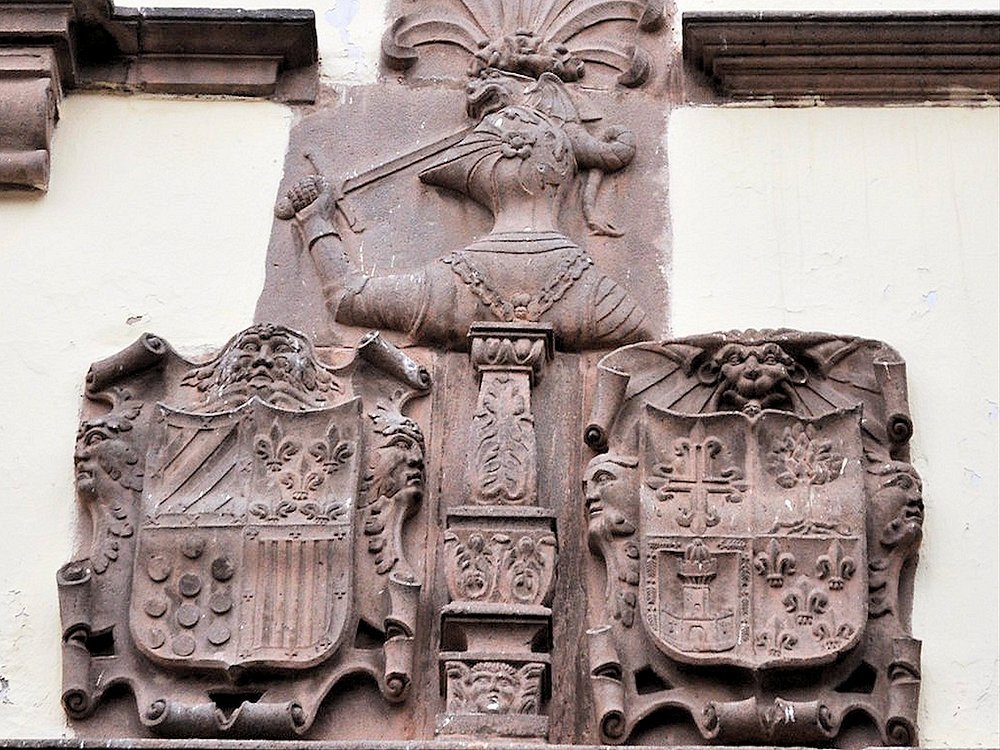
The blazons carved into the façade are far more than decorative family crests. According to historian Luis Enrique Tord, the House of the Admiral was conceived as a sacred architectural structure, filled with esoteric and spiritual symbolism.
The right shield displays the heraldry of the Alderete, Maldonado, and Altamirano families:
Above the shield, a leonine mascaron reinforces themes of strength and dominance.
The left shield is more enigmatic and has inspired multiple interpretations. Based on Tord’s research, its symbols can be read as follows:
Guarding the shields are foliated faces, carved as protective spirits. Above them, dramatic mascarons reveal emotional intent: one leonine, the other a winged feline with bat‑like features, holding a ring in its mouth — interpreted as a symbol of sacred union or eternal commitment.
Both blazons are crowned by a panoply (armored warrior) wielding a sword. Resting atop the warrior’s helmet is a Dragon with bat wings, eagle claws, serpent scales, and open jaws — a mythical guardian representing wisdom, protection, and the safeguarding of temples and treasures.
On the warrior’s chest hangs a collar with a flower bearing a central bud and four cross‑shaped petals, suggesting a connection to the Rosicrucian spiritual order.
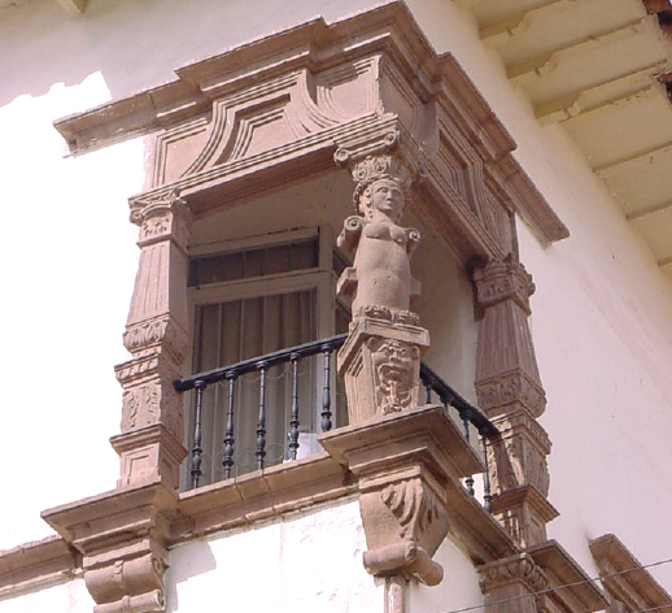
The striking corner ajimez balcony — an architectural element of Arab origin (aš‑šammīs, “exposed to the sun”) — overlooks the historic streets below. Embedded within its design is an androgynous, bifront figure, interpreted as a solar manifestation aligned with the winter solstice.
According to symbolic architectural analysis, the entire building was designed as a ship.
When viewed from above, the structure resembles a vessel:
This “ship” was meant to project power, protect secrets, and transcend death itself. In this reading, the House of the Admiral becomes a metaphysical craft navigating time, memory, and spiritual authority.

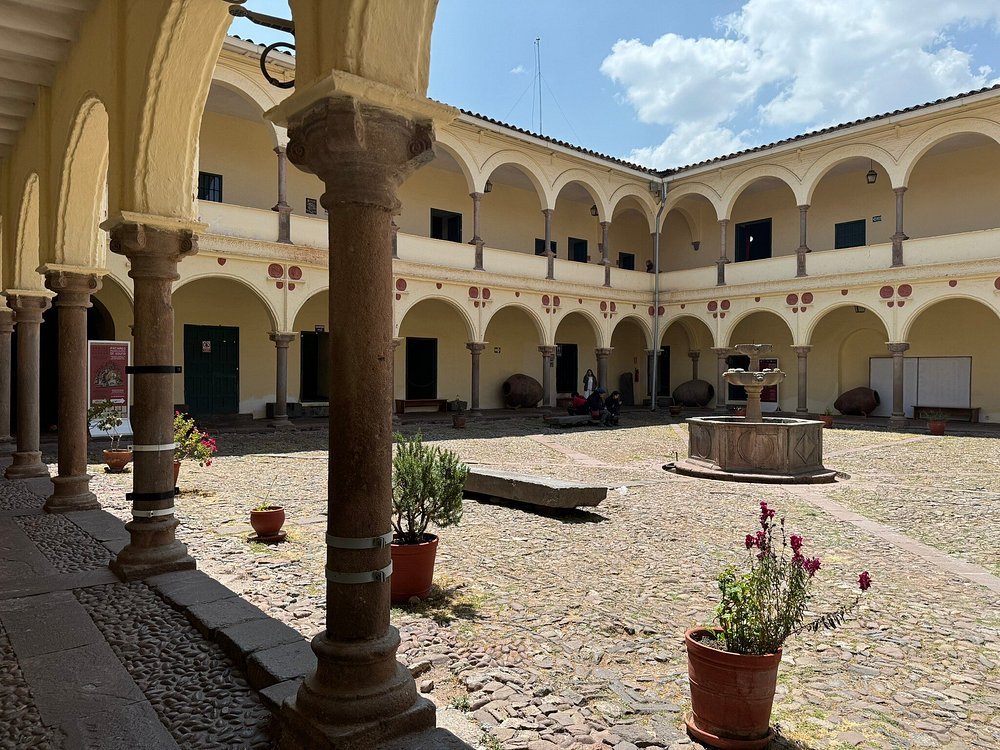
The grand central courtyard is a two‑story quadrangular space with elegant stone arches. Medallions in the spandrels depict Roman warriors and empresses, accompanied by cherubs and laurel leaves.
At its center stands a hexagonal fountain, interpreted as the compass of the Dragon Ship. Alternating diamond and circular motifs decorate its exterior walls, reinforcing the navigational symbolism.
One of the most meaningful features is the frieze running along the cornice, believed to represent the legendary gold chain ordered by Huayna Cápac at the birth of his son Huáscar. Through this symbolism, the building was conceived as a spiritual vessel housing the soul of the Inka.

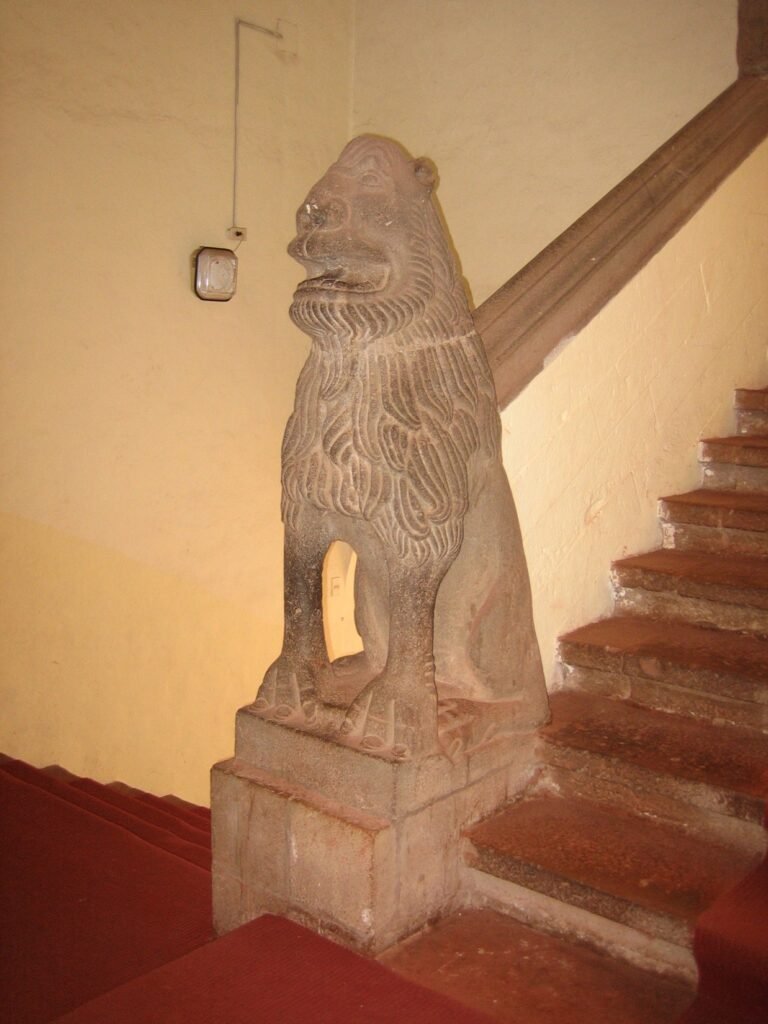
At the staircase leading to the upper floor stands a powerful stone lion, mouth open and body tense. According to Tord, this figure symbolizes fear, authority, and guardianship — protecting what lies beyond.
Nearby, a deeply unsettling sculpture appears: a goat‑like figure with elongated legs, armless limbs, and a dark, menacing expression. Above it sits another horned creature, reinforcing the esoteric and symbolic nature of the space.
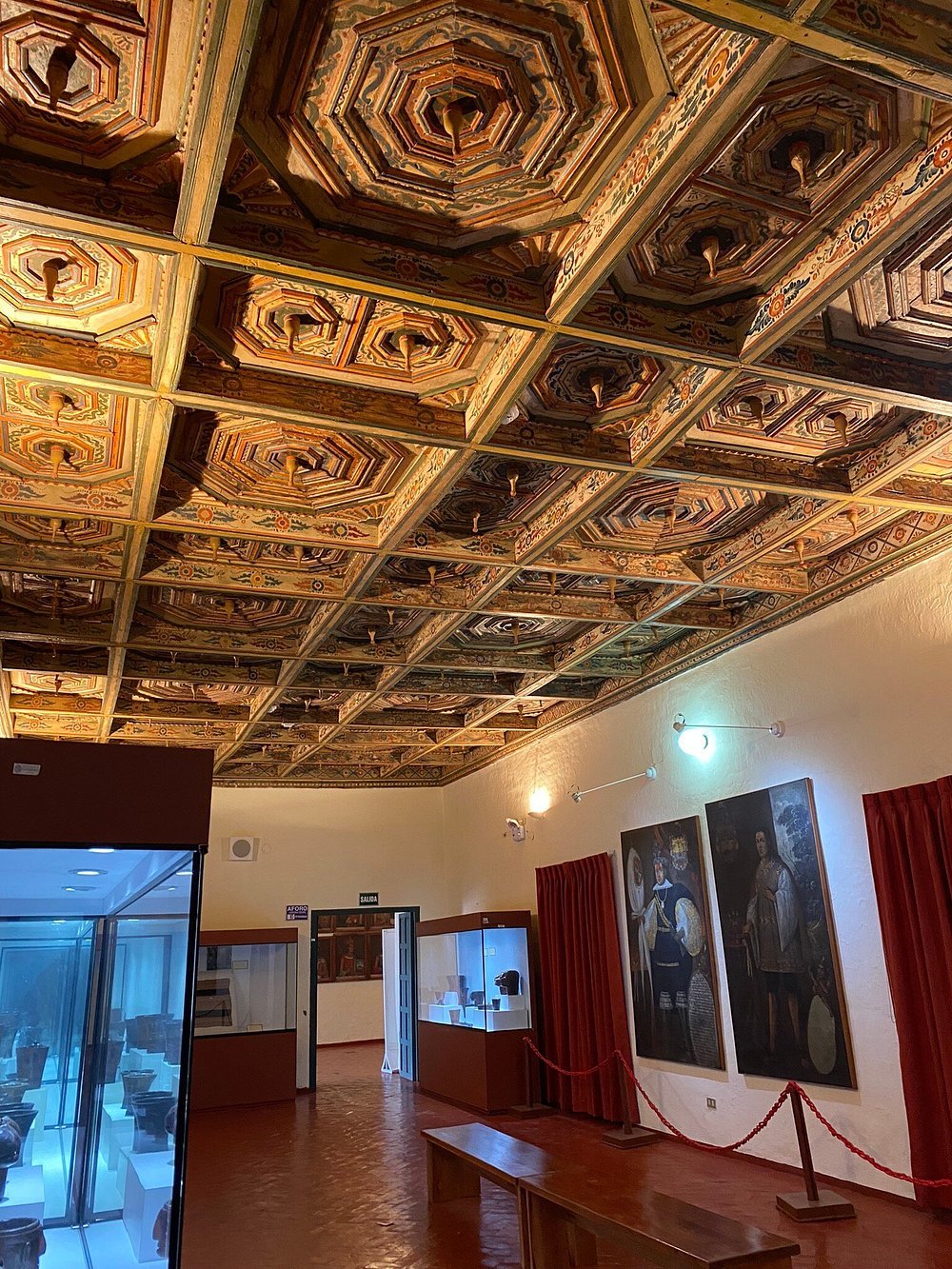
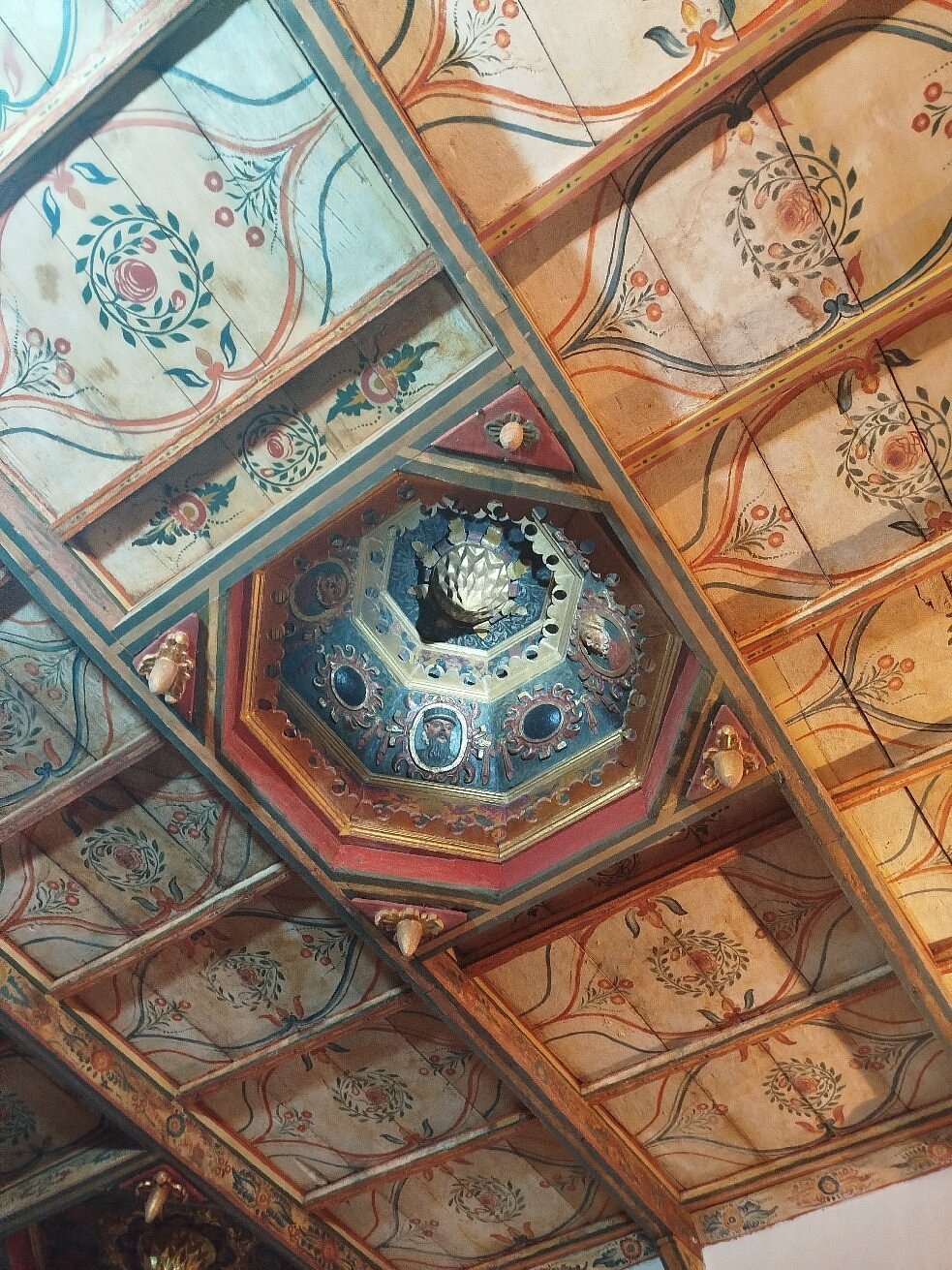
The intricately carved wooden ceiling is a masterpiece of colonial craftsmanship. It reflects the fusion of European artistic techniques with Andean spatial logic — a visual metaphor for cultural collision and transformation.
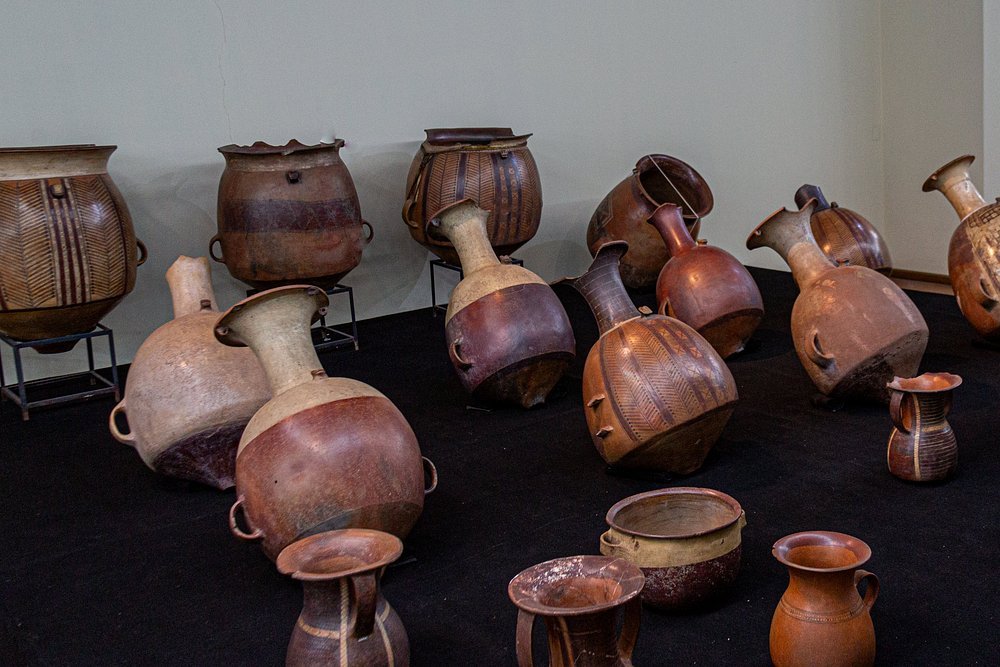
The museum houses one of the most complete collections of Inka and pre‑Inka ceramics in Peru. These vessels reveal social hierarchy, ritual practices, and the deep cosmology of Andean civilization.
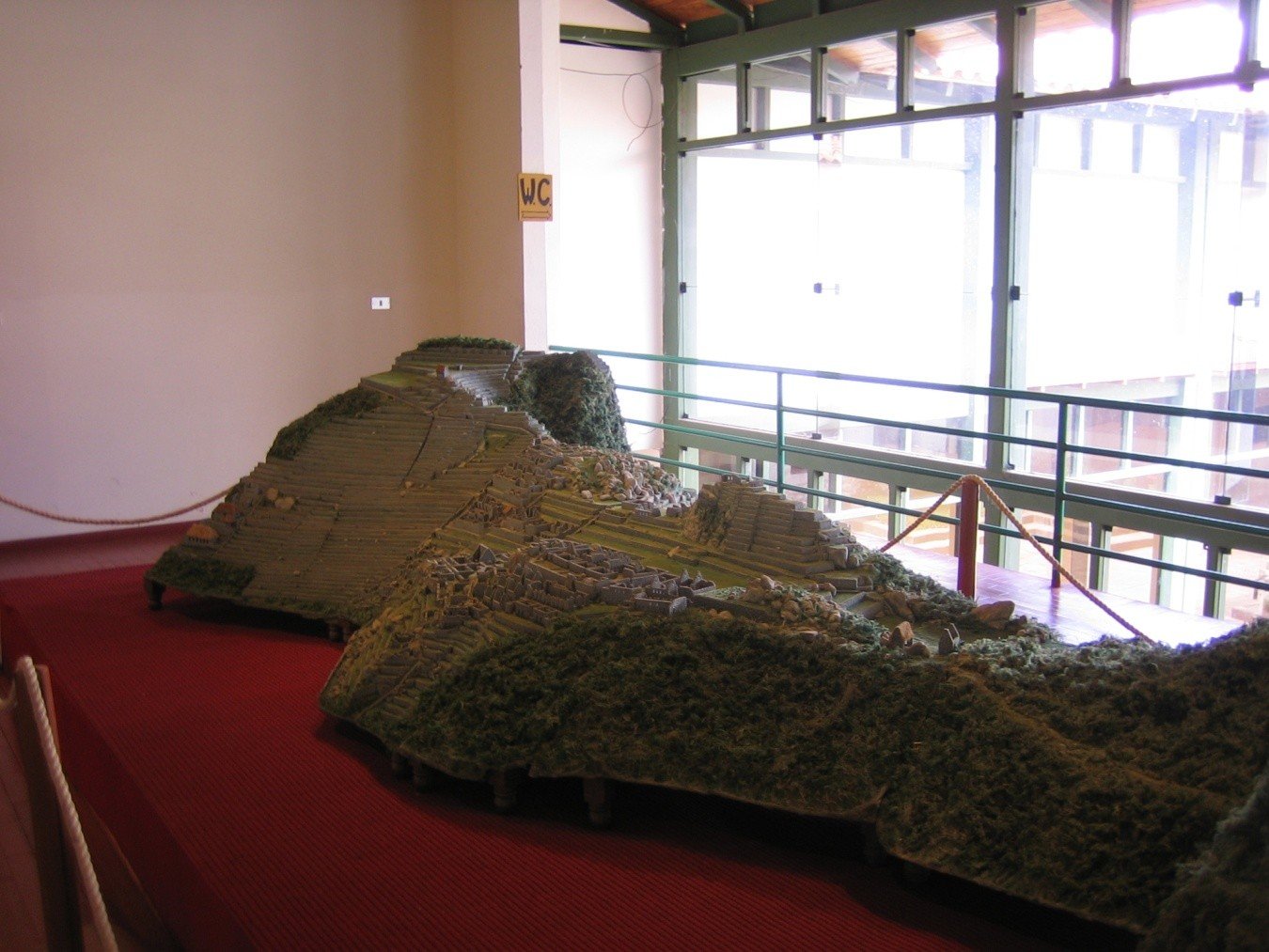
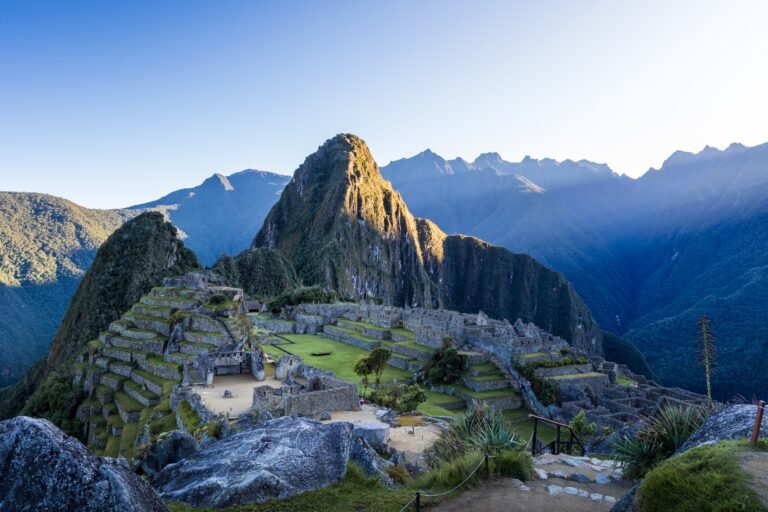
Machu Picchu Scale ModelThe scale model of Machu Picchu allows visitors to understand the site’s urban planning, sacred geometry, and ceremonial zones — essential context before or after visiting the citadel itself.
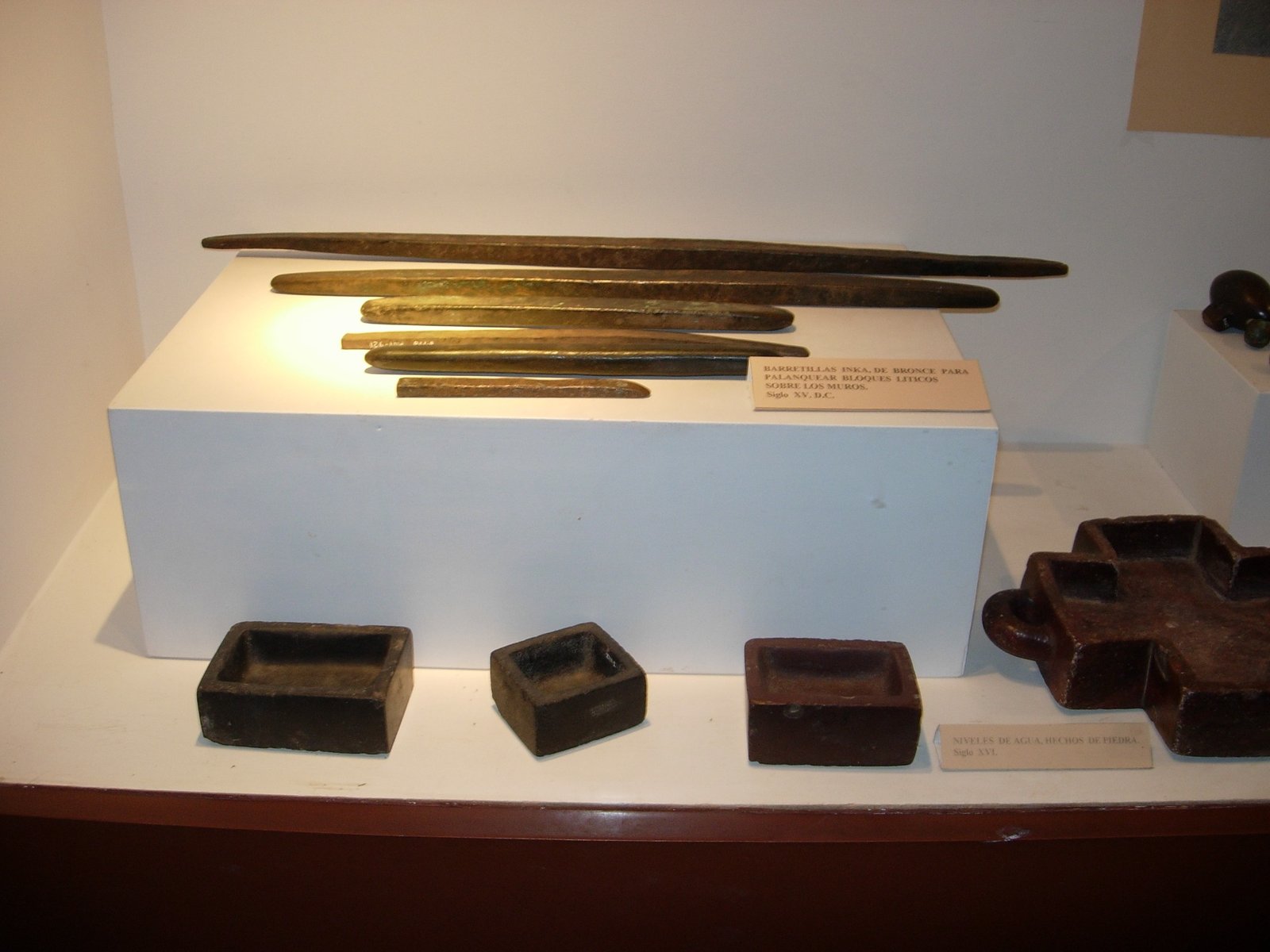
Inka Construction ToolsDisplayed tools demonstrate the extraordinary engineering knowledge of the Inkas. Without iron or wheels, they created earthquake‑resistant structures that still stand today.
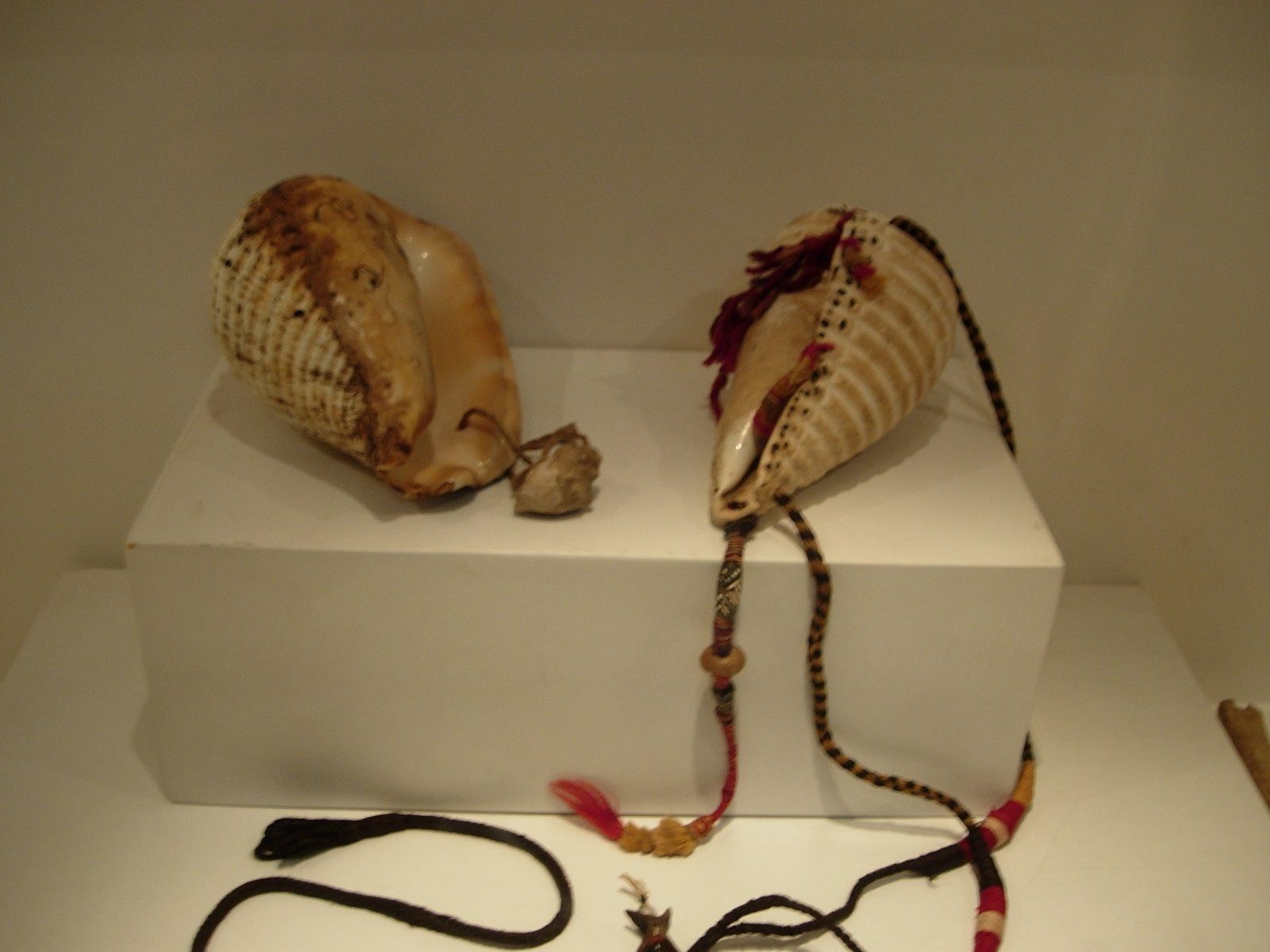
Marine Shells as Musical InstrumentsLarge marine shells, known as pututus, were used as musical instruments and long‑distance communication devices. Their sound carried ritual and ceremonial significance across the Andes.
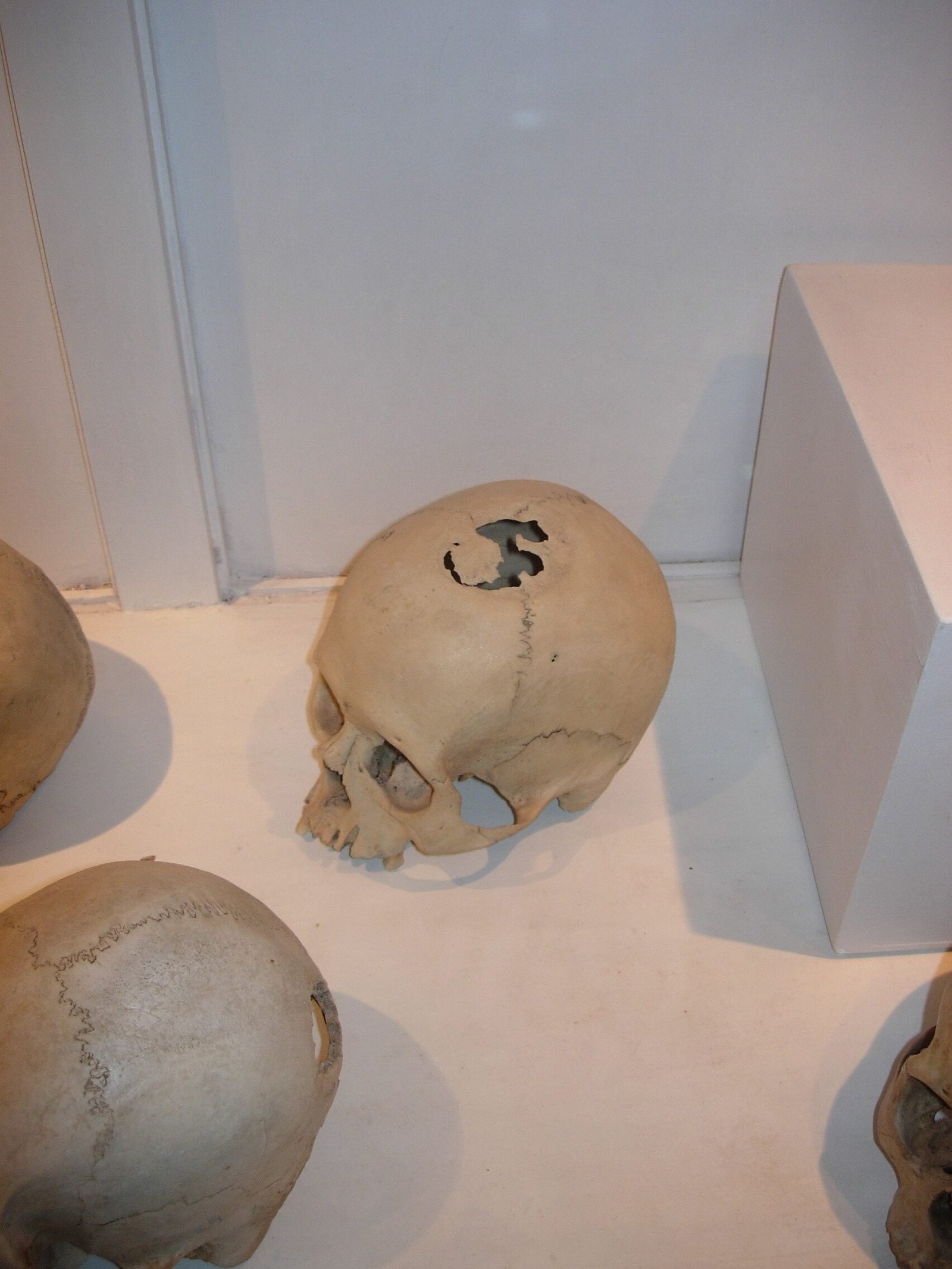
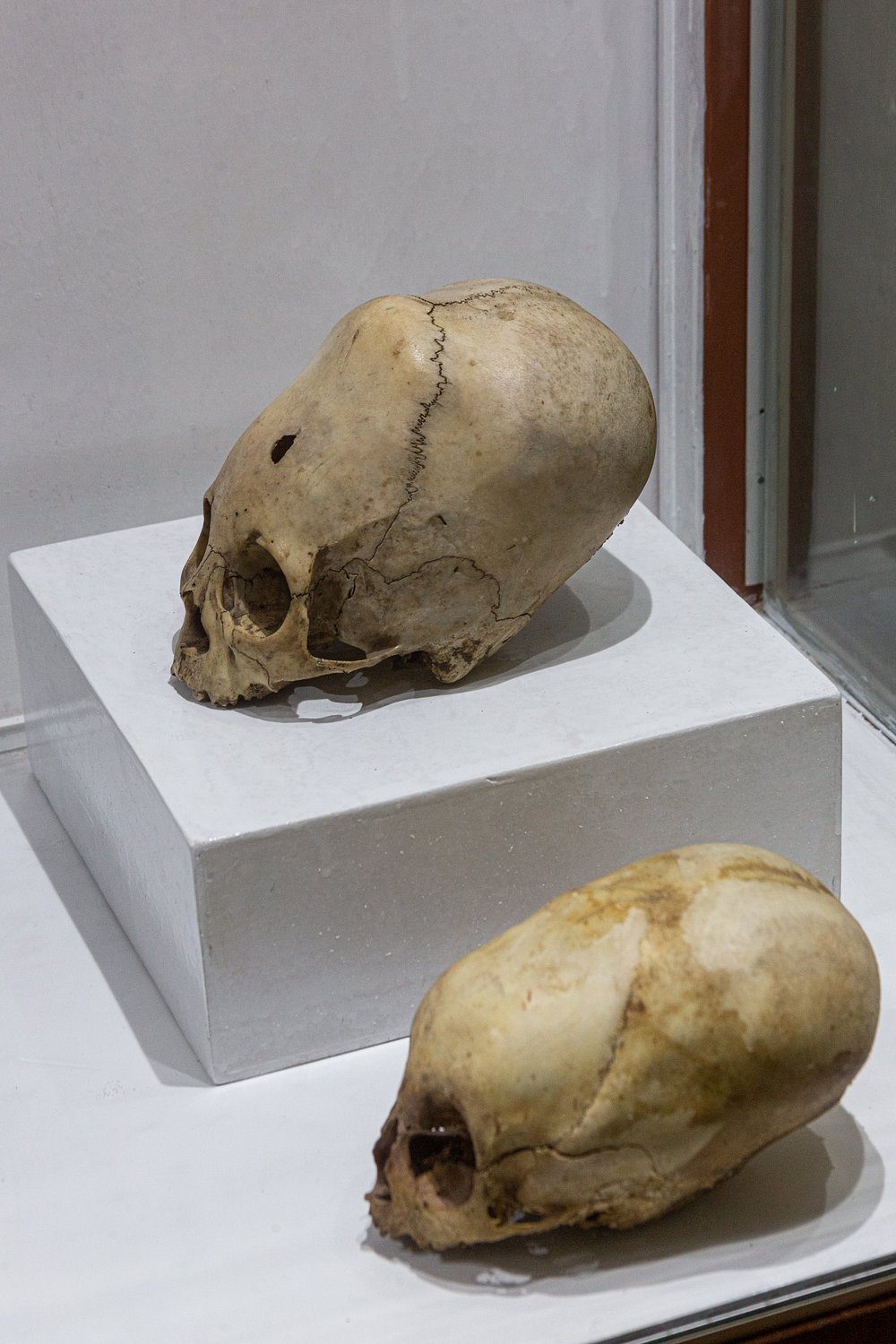
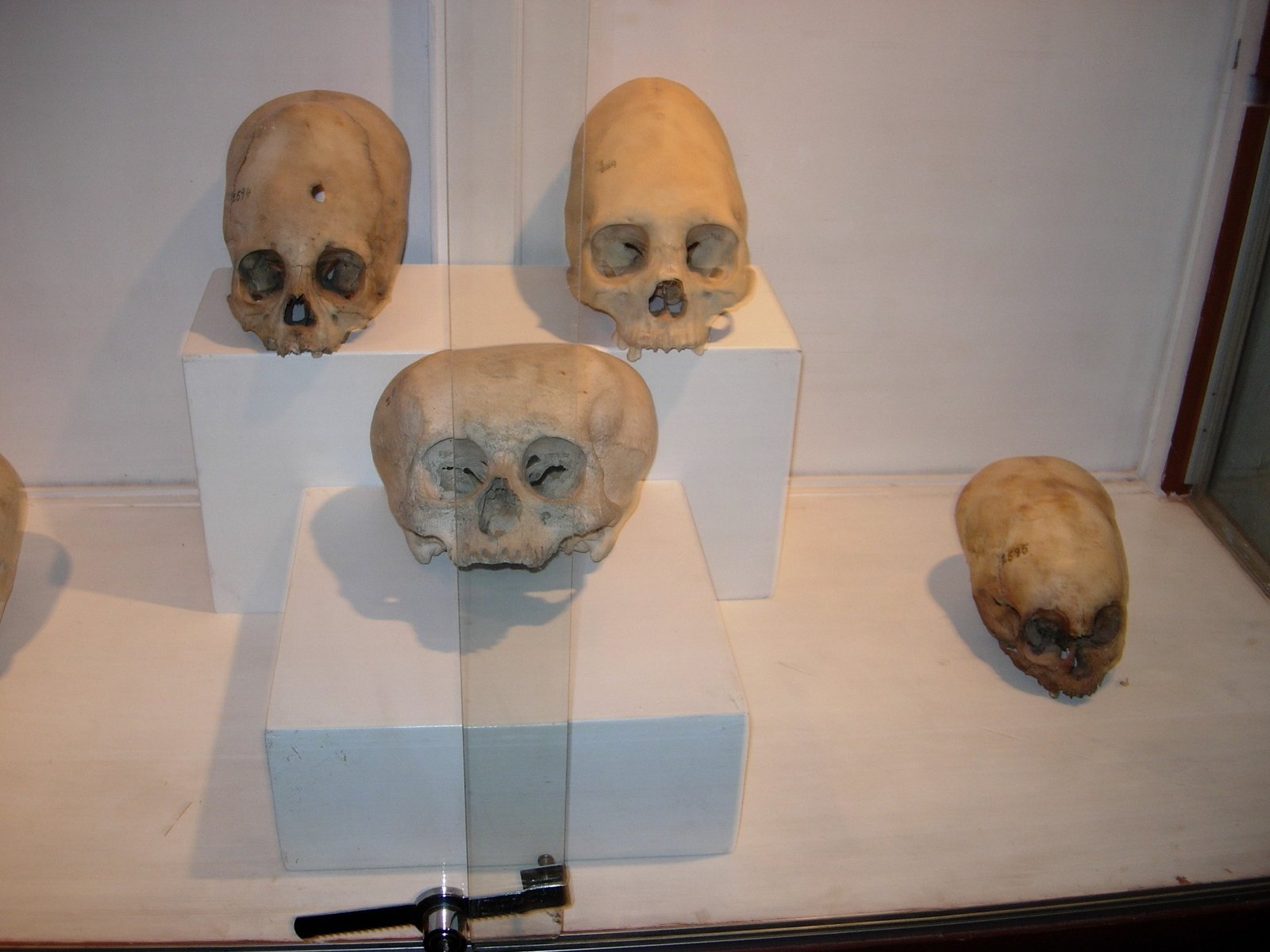
This section displays skulls with intentional cranial deformation and trepanation, revealing advanced medical knowledge. These practices were linked to social status, healing, and spirituality.
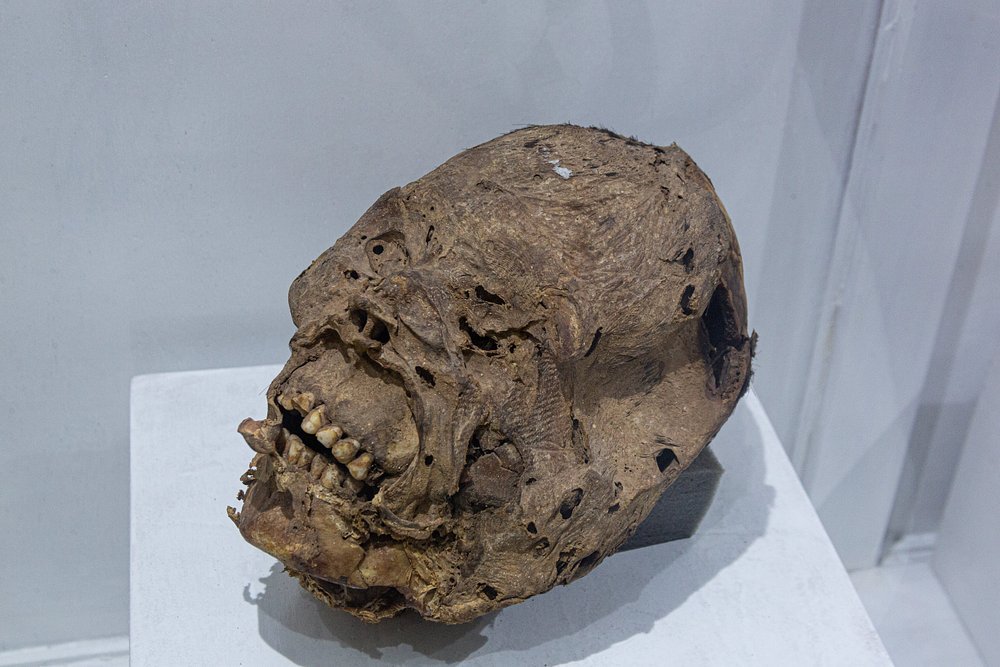
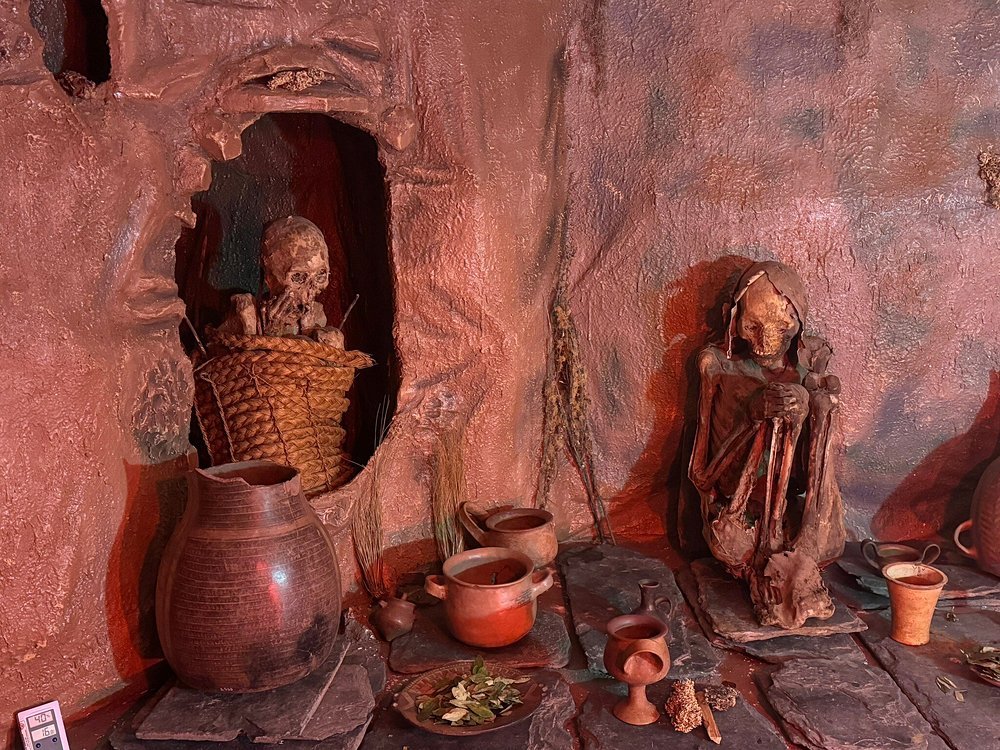
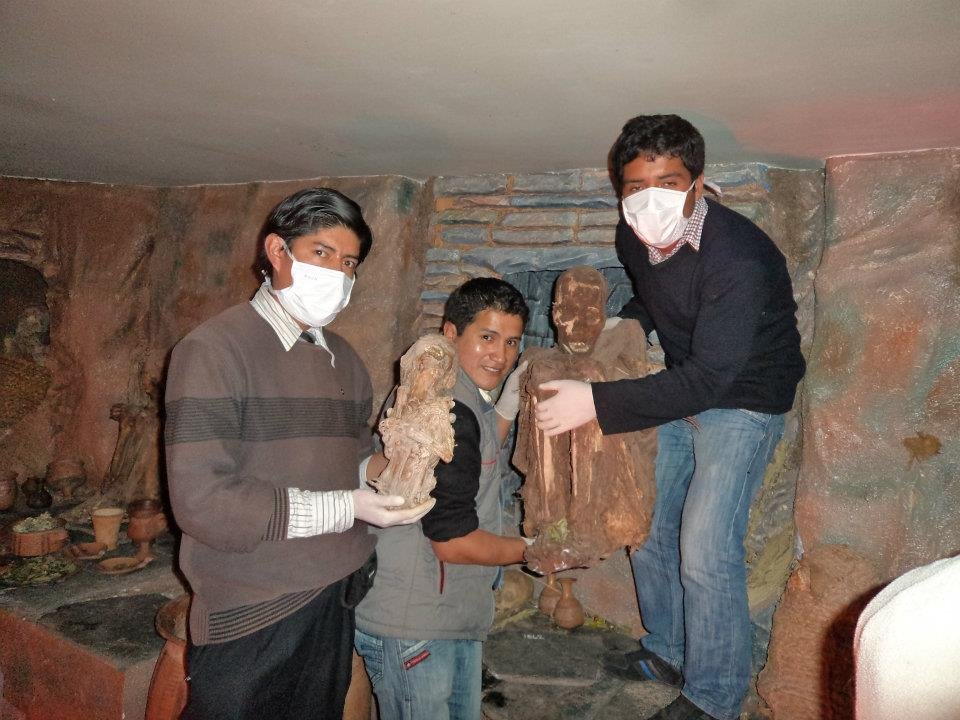
Authentic Inka mummies offer insight into funerary rituals and the Andean relationship between life, death, and ancestors.

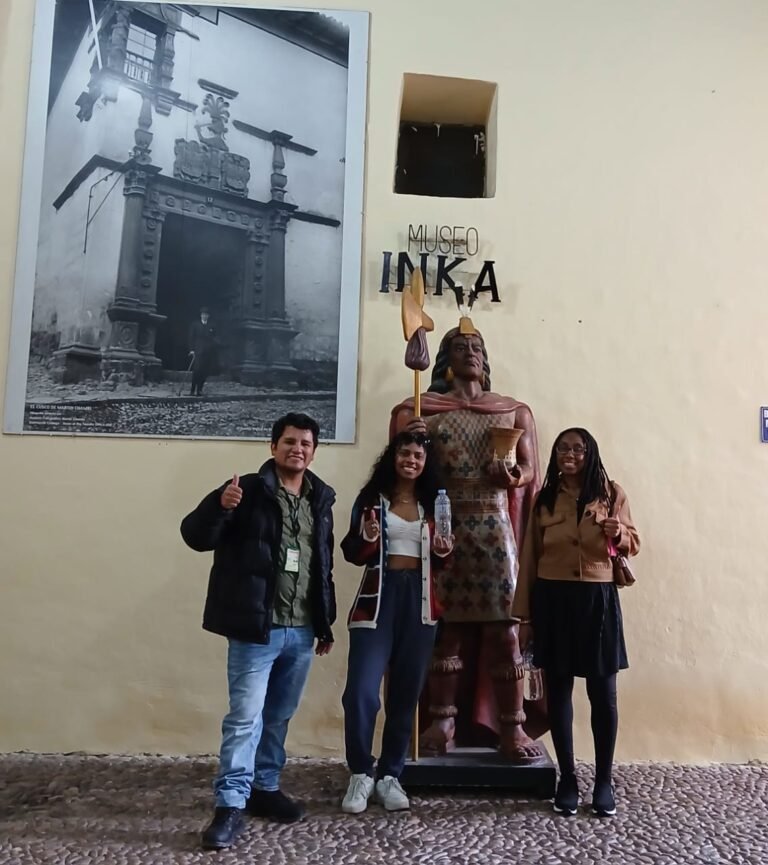
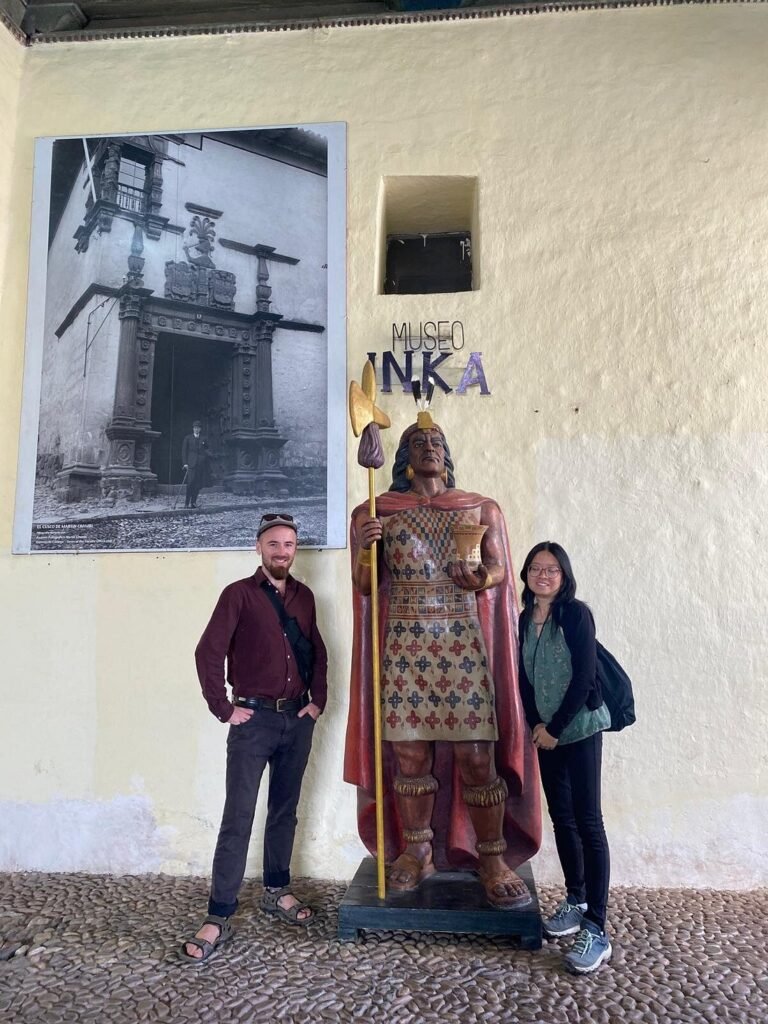
The visit concludes with a symbolic and memorable moment — a photo with the Inka — connecting past and present in a uniquely Cusqueñan way.
The Inka Museum is located in Cusco’s Historic Center, just a short walk from the Plaza de Armas. Easily accessible on foot from most hotels.
Foreign visitors: 20 Peruvian soles | cash payment only.
Monday to Friday: 9:15 AM – 4:00 PM
Guided tour prices vary depending on group size and language. Hiring a local certified guide is highly recommended.
Yes, local guides can be arranged at flexible times, especially with advance booking.
While the museum displays extraordinary artifacts, much of its meaning is not explained in detail. Visiting with a guide transforms the experience — allowing you to identify symbols, understand hidden messages, and connect architecture, history, and spirituality.
A guided visit is educational, immersive, and deeply rewarding, especially for travelers interested in Andean culture beyond Machu Picchu.
The Inka Museum is not just a museum — it is the key to understanding Cusco, the Inkas, and the hidden language of stone and symbols.

For travelers who want to better understand Inca history and culture, Andes Peru Expeditions offers a guided Inka Museum tour in Cusco, a short yet enriching visit before exploring other archaeological sites in the region.